
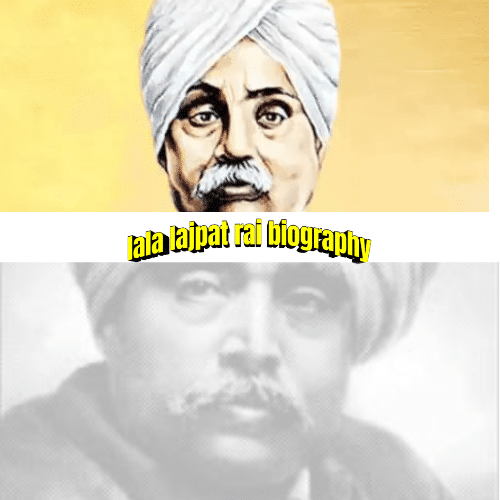
Lala Lajpat Rai was one of the most fearless leaders of India’s freedom struggle. This Lala Lajpat Rai biography highlights the life of a man whose courage, patriotism, and sacrifice inspired millions. Known as the Lion of Punjab, he stood firmly against British oppression and paid the ultimate price for India’s freedom.
His life reflects unwavering dedication to national pride, social reform, and self-rule.
Lala Lajpat Rai – Biography
| Field | Details |
|---|---|
| Full Name | Lala Lajpat Rai |
| Popular Name | Lion of Punjab |
| Date of Birth | 28 January 1865 |
| Birthplace | Dhudike, Punjab (British India) |
| Date of Death | 17 November 1928 |
| Age at Death | 63 Years |
| Nationality | Indian |
| Religion | Hinduism |
| Profession | Freedom Fighter, Author, Politician |
| Father | Munshi Radha Krishna Azad |
| Mother | Gulab Devi |
| Education | Government College, Lahore |
| Political Ideology | Nationalism, Swaraj |
| Known For | Indian Independence Movement |
| Associated Movements | Non-Cooperation Movement |
| Famous Title | Lion of Punjab |
Early Life and Family Background
Lala Lajpat Rai was born on 28 January 1865 in Dhudike village, Punjab. His father, Munshi Radha Krishna Azad, was a scholar of Persian and Urdu, while his mother, Gulab Devi, was deeply religious and compassionate.
Growing up in a disciplined and patriotic environment shaped Lajpat Rai’s values early. His upbringing played a crucial role in forming the moral backbone that later defined his revolutionary activities.
Education and Intellectual Development
Lala Lajpat Rai studied law at Government College in Lahore. During his student years, he became actively involved in nationalist discussions and student movements.
He was heavily influenced by Indian philosophy, Arya Samaj teachings, and Western political thought. This blend of ideologies made him a powerful thinker and speaker.
Education didn’t just make him a lawyer—it made him a leader.
Entry into the Indian Freedom Movement
Lala Lajpat Rai joined the Indian National Congress and quickly rose as a prominent leader. Along with Bal Gangadhar Tilak and Bipin Chandra Pal, he formed the famous Lal-Bal-Pal trio, representing extremist nationalism.
This trio demanded:
- Complete self-rule (Swaraj)
- Boycott of British goods
- Promotion of Swadeshi movement
Their bold stance energized the masses.
Role in the Non-Cooperation Movement
Lala Lajpat Rai strongly supported Mahatma Gandhi’s Non-Cooperation Movement. He believed mass participation was key to dismantling British authority.
He encouraged Indians to:
- Reject British institutions
- Promote indigenous education
- Support local industries
This phase of his life is central to every authoritative Lala Lajpat Rai biography.
Contribution to Social Reforms
Beyond politics, Lala Lajpat Rai worked tirelessly for social upliftment.
Major Contributions
- Promoted women’s education
- Supported widow remarriage
- Advocated against caste discrimination
- Established schools and orphanages
He believed freedom was meaningless without social equality.
Lala Lajpat Rai as a Writer and Thinker
Lala Lajpat Rai was also a prolific writer. His books reflected nationalist ideology and political awareness.
Notable Works:
- Unhappy India
- England’s Debt to India
- Young India
Through his writings, he reached audiences far beyond political rallies.
Protest Against Simon Commission
In 1928, Lala Lajpat Rai led a peaceful protest against the Simon Commission in Lahore. The commission excluded Indian members, sparking nationwide outrage.
During the protest, British police brutally lathi-charged demonstrators. Lala Lajpat Rai was severely injured.
He famously declared:
“Every blow on my body will be the final nail in the coffin of British rule in India.”
Martyrdom and Death
Lala Lajpat Rai succumbed to his injuries on 17 November 1928. His death shook the nation and intensified the freedom movement.
His martyrdom directly inspired revolutionaries like Bhagat Singh, who later avenged his death.
Legacy and National Recognition
Lala Lajpat Rai’s legacy lives on through institutions, roads, and movements named after him.
Honors and Remembrance
- Lajpat Nagar (Delhi)
- Lala Lajpat Rai University
- Statues across India
He remains a symbol of fearless resistance.
Why Lala Lajpat Rai Is Still Relevant
Even today, Lala Lajpat Rai represents:
- Courage against injustice
- Unity in diversity
- Moral leadership
- National self-respect
His ideals remain deeply relevant in modern India.
Frequently Asked Questions (FAQs)
1. Why is Lala Lajpat Rai called the Lion of Punjab?
Because of his fearless leadership and bold resistance against British rule.
2. What was Lala Lajpat Rai’s role in freedom struggle?
He was a key nationalist leader, part of Lal-Bal-Pal, and a Non-Cooperation Movement supporter.
3. How did Lala Lajpat Rai die?
He died due to injuries sustained during a police lathi charge in 1928.
4. Was Lala Lajpat Rai a revolutionary?
Yes, he inspired revolutionary movements through leadership and sacrifice.
5. Which books were written by Lala Lajpat Rai?
Unhappy India, Young India, and England’s Debt to India.
6. What is Lala Lajpat Rai’s birth date?
28 January 1865.
Conclusion
This Lala Lajpat Rai biography reveals a life lived with purpose, courage, and sacrifice. He didn’t just fight for freedom—he became a symbol of it. The Lion of Punjab roared against injustice, and his echo still inspires India today.